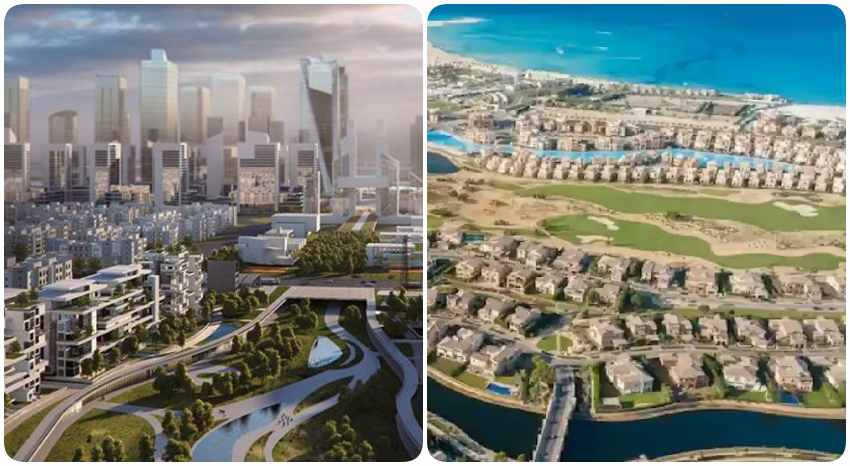
The question of whether to invest in the North Coast or the New Administrative Capital has become one of the most important questions in Egypt’s real estate market in recent years. The North Coast is no longer just a summer holiday destination, and the New Administrative Capital is no longer only a major government project on the eastern edge of Cairo. Both now represent different investment directions, different lifestyles, and different types of risks and returns.
The North Coast appeals to buyers looking for scarcity, sea views, luxury, second homes, tourism potential, seasonal rental income, and future value linked to the area’s transformation into an international destination. The New Administrative Capital, on the other hand, appeals to buyers looking for a city of work, administration, permanent residence, modern infrastructure, and future demand for housing, services, offices, and commercial activity.
The real question is not simply: which is better? The more accurate question is: which is better for you? Are you a property owner trying to understand the future of your area? A buyer looking for a home or a second home? An investor seeking clear returns? A developer studying where to launch the next project? Or a family comparing long-term use with investment potential?
This article presents a realistic comparison based on market reading, recent reports from respected research and advisory firms, and the actual changes taking place in Egypt’s real estate market in terms of demand, pricing, financing, and buyer behavior.
First: The Nature of Investment in the North Coast
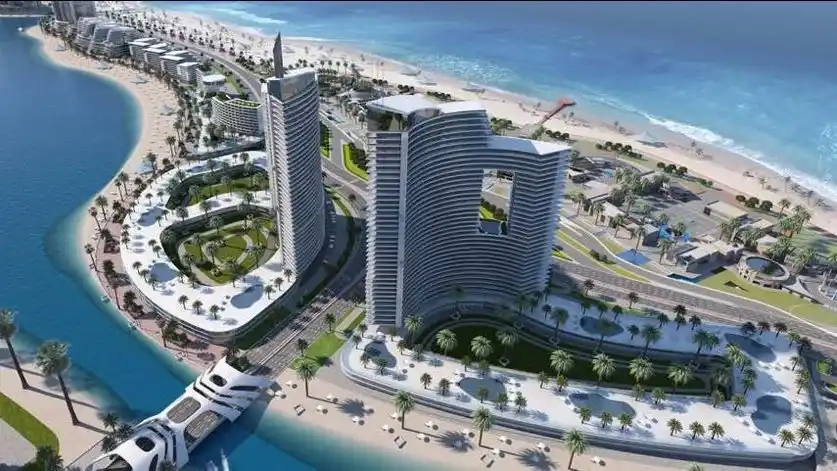
For many years, the North Coast was mainly a seasonal market, driven by summer usage and buyers looking for a second home or a family holiday property. However, this image has gradually changed. Major developments, New Alamein, Ras El Hekma, and growing Gulf investment interest have all shifted the North Coast from a simple summer destination into a long-term tourism and real estate investment corridor.
Knight Frank’s 2025 report on Egypt pointed to strong interest from global high-net-worth individuals in the Egyptian market, especially in major projects, residential real estate, offices, luxury properties, and branded residences. The report also noted that Egypt has become the third-largest construction market in the region, with more than USD 120 billion in awarded contracts and over USD 565 billion in future project plans.
This context is important for understanding the North Coast. Investment there is no longer purely local. It is increasingly connected to a wider regional trend toward coastal cities, tourism, hospitality, luxury real estate, and branded residences.
Most importantly, the Ras El Hekma deal changed the way investors look at the entire North Coast. Reuters reported that the Ras El Hekma deal announced in 2024 included USD 35 billion in short-term investments, including USD 24 billion for land rights, with the project aiming to develop a new city across a major area on Egypt’s Mediterranean coast.
This was followed by another major Qatari investment on Egypt’s Mediterranean coast. Reuters reported in November 2025 that Qatari Diar would invest USD 29.7 billion in a luxury tourism and real estate project, including golf courses and marinas, with a USD 3.5 billion land payment within the overall investment.
These figures do not mean that every project in the North Coast will rise in value at the same pace. However, they confirm that the North Coast has become part of the regional investment map, not only the Egyptian summer holiday map.
Second: The Nature of Investment in the New Administrative Capital
The New Administrative Capital represents a completely different type of investment. It is not seasonal and does not depend on the sea or tourism. Instead, it is based on the concept of an integrated new city: government, business, housing, education, services, infrastructure, financial districts, and administrative and commercial centers.
The strength of the New Administrative Capital comes from its position as a long-term urban project linked to the redistribution of administrative and economic activity east of Cairo. Therefore, investment there does not depend on a summer season or tourist demand, but on gradual growth in housing, employment, services, and the actual movement of residents and companies.
JLL’s Cairo residential market report for Q3 2025 indicated that around 7,500 residential units were delivered during the third quarter, mainly in the R7 district of the New Administrative Capital, raising Cairo’s total residential stock to around 317,000 units. The report also noted that land acquisitions during the same quarter reflected renewed confidence in Cairo’s residential market, while lower interest rates and improving economic conditions could support a medium-term recovery in the ownership market.
This means that the New Administrative Capital is entering a different phase: moving from sales on plans to actual deliveries and gradual operation. However, delivery does not always mean immediate full occupancy. Some districts are still under construction and activation, so investors must distinguish between a project that is genuinely operational and an area that is still forming.
Third: The Core Difference in Demand
The main difference between the North Coast and the New Administrative Capital lies in the type of demand.
In the North Coast, demand usually comes from buyers looking for a second home, long-term investment, family holidays, luxury products, or an opportunity in an area expected to undergo a major tourism transformation. Demand there is affected by factors such as the project’s beachfront position, developer strength, quality of operation, proximity to New Alamein or Ras El Hekma, beach quality, hotel-style services, and seasonal rental potential.
In the New Administrative Capital, demand is more closely linked to permanent or semi-permanent residence, employee relocation, proximity to work, daily services, schools, universities, offices, retail areas, and the ability to live there all year round.
For this reason, the North Coast and the New Administrative Capital cannot be compared only by price per square meter. The price per square meter in the North Coast may reflect scarcity, sea access, seasonality, and luxury. The price per square meter in the New Administrative Capital reflects infrastructure, future residential demand, proximity to administrative and financial districts, and the city’s gradual growth over time.
Fourth: Rental Yield in the North Coast and the New Administrative Capital
Rental income in the North Coast is often seasonal. A unit may generate strong income during the summer months, especially if it is located in a well-known project, close to the beach, well furnished, and professionally managed. Outside the season, however, demand may decline significantly unless the project succeeds in creating year-round activity or is close to continuous work, tourism, and service hubs.
In the New Administrative Capital, expected rental income depends more on long-term residence, offices, and services. As more residents, employees, and companies move in, the opportunity for stable rental income improves. The return may be less dramatic than the North Coast during peak summer, but it can be more consistent if the elements of operation and occupancy are completed.
For investors seeking regular cash flow, the New Administrative Capital may be more logical in the medium term, provided that the selected location and project are suitable for occupancy. For investors seeking capital gain linked to scarcity, coastal transformation, and major regional investments, the North Coast may be more attractive, although it comes with higher seasonality and operational risk.
Fifth: Resale and Liquidity
Liquidity in real estate does not simply mean that the property is good. It means that there is a buyer ready to pay when you decide to sell.
In the North Coast, resale depends strongly on the project name, proximity to the sea, phase, finishing, delivery date, and the reputation of the location. Special units in strong projects can be highly demanded, while units located far from the sea or in less recognized projects may take longer to sell.
In the New Administrative Capital, resale depends on project readiness, proximity to services, occupancy level, price compared with the developer, and unit type. Small and medium-sized residential units in strong locations may be more liquid than very large units or units that do not match actual demand.
Savills’ Cairo Property Report 2025 noted that the Egyptian real estate market is going through a transformation, with shifting consumer demand, new financing mechanisms, and structural changes across the sector. It also described residential real estate as a trusted investment tool, with dollar-denominated price stability despite currency volatility, while developers continued to support buyer confidence through limited discounts, longer payment plans, fully finished units, and near-delivery products.
This point is very important: the market no longer accepts every product with the same strength. Liquidity goes to good, clear, usable properties that are designed around real demand.
Sixth: Risks in the North Coast
Despite the strength of the North Coast, investment there carries risks that should be understood.
The first risk is seasonality. If a project does not have a strong operation plan, the unit may be used mainly during the summer months only. The second risk is overpricing due to general excitement after major deals. Not every project in the North Coast is Ras El Hekma, and not every location deserves the same pricing level.
The third risk is delivery timeline. Many North Coast projects are sold over long periods, so buyers need to review the developer’s strength, track record, and ability to execute. The fourth risk is maintenance and operation costs, especially in luxury projects with extensive services. These costs can affect the real return if the aim is rental income.
The fifth risk is resale outside the summer season. Demand may be strong in summer and weaker in winter, which means that both the project and the specific unit must be selected carefully.
Seventh: Risks in the New Administrative Capital

The New Administrative Capital also has risks. The most important risk is the timing of real operation. A unit may be delivered, but the surrounding area may not yet have reached the level of daily life required for strong occupancy. This affects both rental income and resale.
The second risk is the large supply. The presence of many projects and units creates strong competition, which makes it essential for investors to choose a strong project, a clear location, and a suitable entry price.
The third risk is the gap between promise and operation. Some projects may look attractive on paper, but investors should ask: are there residents? Are there services? Are roads convenient? Is the project well managed? Is the unit actually suitable for real demand?
The fourth risk is choosing the wrong property type. Not all offices, retail units, or residential properties in the New Administrative Capital have the same strength. An office or retail unit requires a completely different study from a residential apartment.
Eighth: Which Is Better for Real Estate Developers?
For developers, the North Coast offers opportunities for luxury products, branded residences, second homes, hospitality, chalets, villas, and hotels. However, it requires strong land, exceptional design, real operation management, and the ability to create a destination, not just summer units.
The New Administrative Capital offers opportunities for residential, office, commercial, and service projects. But it requires a deep understanding of actual demand. It is no longer enough for a developer to launch many units with long payment plans. Buyers have become more aware. They look for a usable project, a logical price, a real location, and services that can actually operate.
Savills’ view that the market is moving toward greater stability and more reliance on real demand, and that developers focusing on practical user-centered designs are standing out more, applies strongly to both the New Administrative Capital and the North Coast.
Ninth: Which Is Better for Second Home Buyers?
If the purpose is truly a second home, the North Coast is clearly stronger. The sea, summer weather, family lifestyle, holiday value, and potential seasonal rental income all make the North Coast much closer to this purpose.
However, the project must be selected carefully. Buyers should look for a project with strong management, clear delivery, operational services, and a location within an area expected to grow, rather than a remote project that depends only on future promises.
The New Administrative Capital is not a second home in the traditional sense. It is closer to a first home, an urban investment, or a unit linked to work, housing, and daily services. Therefore, if the buyer wants a holiday home, the North Coast is more suitable. If the buyer wants an urban asset that can be lived in or rented all year round, the New Administrative Capital may be more appropriate.
Tenth: Which Is Better for Investors?
If the investor is looking for long-term capital growth linked to the North Coast’s transformation into an international destination, the North Coast may be a strong choice, especially in areas supported by major projects such as Ras El Hekma, New Alamein, and locations close to Gulf investments.
However, if the investor is looking for more regular income and year-round rental potential, the New Administrative Capital may be more suitable, especially as operation progresses and more residents and companies move in.
The smarter investment strategy may not be to choose only one area. Some investors may balance between both: an asset in the North Coast for lifestyle, hedging, and long-term growth, and an asset in the New Administrative Capital or East Cairo for rental income and continuous use.
A Brief Comparison Between the North Coast and the New Administrative Capital
The North Coast suits buyers looking for a second home, luxury, summer lifestyle, capital growth, seasonal rental income, and investment linked to tourism and scarcity.
The New Administrative Capital suits buyers looking for urban residence, long-term rental income, offices, services, a business city, and investment linked to continuous operation and the eastward growth of Greater Cairo.
The North Coast is stronger in scarcity, emotional value, sea access, and major tourism projects.
The New Administrative Capital is stronger in daily use, permanent residence, offices, and services.
The North Coast’s risks include seasonality, overpricing, and choosing a weak project.
The New Administrative Capital’s risks include timing of real operation, large supply, and choosing an inactive location.
Conclusion: Where Is the Smarter Decision?
There is no single answer. The North Coast and the New Administrative Capital represent two different types of real estate investment.
If you are looking for a second home, family value, a luxury asset, a connection to the sea, and long-term growth potential supported by international investment, the North Coast deserves serious consideration.
If you are looking for an urban asset that can be lived in or rented all year round, linked to a new city and an administrative and economic infrastructure, the New Administrative Capital may be more suitable.
For professional investors, the question is not simply: North Coast or New Administrative Capital? The real questions are: which project, which developer, which entry price, which delivery date, what liquidity, and what type of demand will buy or rent from you later?
A good property is not good only because it is in the North Coast or only because it is in the New Administrative Capital. A good property combines the right location, logical price, trusted developer, sound documents, real demand, and a clear exit possibility.
In 2026, the Egyptian real estate market will not reward those who buy based only on trends. It will reward those who buy based on proper study.
Frequently Asked Questions
Is investing in the North Coast better than investing in the New Administrative Capital?
Not always. The North Coast is better for buyers looking for a second home and capital growth linked to tourism and scarcity, while the New Administrative Capital is better for buyers looking for residence, long-term rental income, and year-round use.
Is the North Coast still seasonal?
Yes, but it is gradually changing with major projects such as Ras El Hekma, New Alamein, and Gulf investments. However, the strength of each project still depends on its location, management, and operation.
Is the New Administrative Capital suitable for real estate investment?
Yes, but it requires careful selection of location, developer, unit type, and delivery date. The best investment is in a project that can genuinely operate, not only one that looks attractive on paper.
Where is rental return better?
The North Coast may generate strong seasonal rental income in summer, while the New Administrative Capital may generate more regular rental income over the long term if operation is completed and residential and business demand increases.
Which is better for a second home?
The North Coast is closer to the concept of a second home because of the sea, lifestyle, and family holidays. The New Administrative Capital is closer to urban residence and long-term investment.
What are the most important factors when choosing a North Coast project?
Location, proximity to the sea, developer strength, beach quality, operation management, delivery date, maintenance costs, and rental or resale potential.
What are the most important factors when choosing a project in the New Administrative Capital?
Proximity to services and business districts, delivery status, actual occupancy, developer strength, price compared with competitors, and how suitable the unit is for real demand.