Why Has the Comparison Between the North Coast and the Red Sea Become Essential?
Egypt's real estate market has witnessed a major shift in the nature of coastal investment over recent years. Buying a vacation unit is no longer just a leisure decision — it has become an investment decision that requires careful analysis, especially with rising prices in major North Coast and Red Sea projects, the entry of large developers, and the emergence of massive coastal cities and communities targeting local, regional, and international segments.
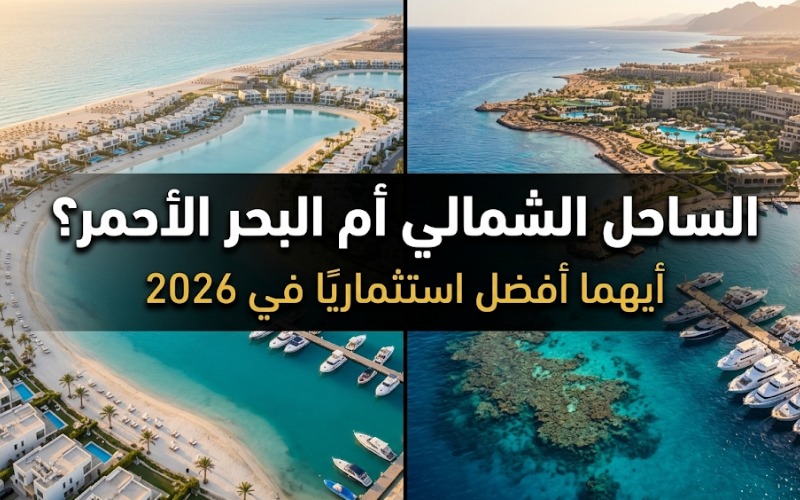
With this evolution, the most frequently asked question among investors has become: Which is the better investment — the North Coast or the Red Sea?
The answer is not absolute. Each area operates on a different investment logic.
- The North Coast relies heavily on capital appreciation, local demand, scarcity, and the Ras El Hikma story.
- The Red Sea relies more on tourism operations, extended usage seasons, rental yields, and foreign demand.
Therefore, a fair comparison is not between two regions alone, but between two fundamentally different investment models.
First: What Does Safe Investment in Coastal Real Estate Mean?
When discussing investment in a luxury coastal project, it is not enough for the project to be beautiful or developed by a reputable company. Safe investment must be measured by a set of interconnected factors, most importantly:
- The developer's strength and track record
- Project location
- Payment plan
- Management and operational quality post-delivery
- Actual demand for the area
- The unit's rental potential
- Ease of resale
- Competition from other projects
In other words, the investor is not just buying a unit — they are buying a location, a community, management quality, future operational viability, and an exit strategy.
This is precisely where the importance of comparing the North Coast and the Red Sea becomes clear.
The North Coast: Investment Based on Capital Growth and Value Preservation
Why Does the North Coast Remain a Strong Investment Destination?
The North Coast — particularly from Sidi Abdel Rahman to Ras El Hikma and beyond — has become one of Egypt's strongest real estate markets in terms of demand volume, developer names, price levels, and the nature of existing and upcoming residential and tourism communities.
The area's investment outlook was further strengthened after the Ras El Hikma deal, in which ADQ announced a $35 billion investment, including $24 billion for Ras El Hikma development rights, with the goal of transforming the area into one of the largest new cities on the Mediterranean coast. Reuters also reported that Modon was appointed as the lead developer for the Ras El Hikma project, aiming to build a next-generation city across a vast area, with partnerships in infrastructure, energy, airports, and contracting.
These developments position the North Coast not merely as a seasonal destination, but as a region primed for gradual repricing over the medium and long term — especially as infrastructure improves and sovereign and tourism investments increase.
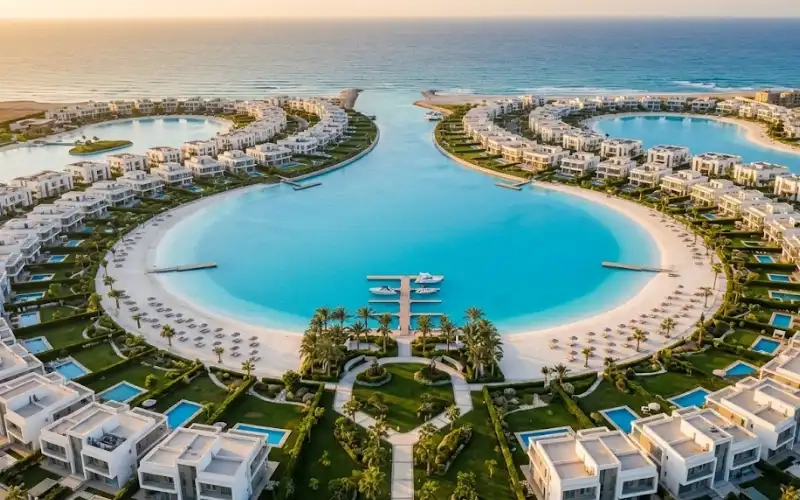
Strengths of Investing in the North Coast
The North Coast's most defining characteristic is the strength of local demand. For a large segment of Egyptians — particularly those from Greater Cairo — the North Coast is not merely a tourist destination, but a social and investment symbol. Owning a unit in a top North Coast project has become part of a lifestyle and a vehicle for preserving value.
The second advantage is the presence of major developers and large-scale projects with integrated communities. These projects don't just sell units — they sell a lifestyle: beaches, lagoons, restaurants, hotels, commercial areas, services, and family activities.
The third advantage is that the North Coast stands to benefit in the coming years from the expected transformation of Ras El Hikma into a global tourism and investment hub. This doesn't mean every unit in the North Coast will automatically appreciate — but it does mean the region as a whole has entered a much broader circle of investment interest than before.
Investment Challenges in the North Coast
Despite the North Coast's strengths, there are challenges investors must take into account.
The first challenge is seasonality. Much of the North Coast remains a summer market, with usage and rental income concentrated in a limited number of months per year. This constrains some units' ability to generate strong annual rental yields compared to year-round markets.
The second challenge is high prices. Major projects in the North Coast are now selling at elevated prices, reducing the margin for quick gains compared to earlier periods. When an investor enters at a high price point, the market needs time to absorb that price and offer a meaningful profit upon resale.
The third challenge is oversupply. The constant launch of new projects and phases gives buyers many alternatives, and developers themselves may compete with investors in the resale market by offering new units with longer payment plans.
Therefore, the North Coast is no longer suited for quick speculation as it once was. It now leans more toward a medium-to-long-term investment that requires patience and careful selection.
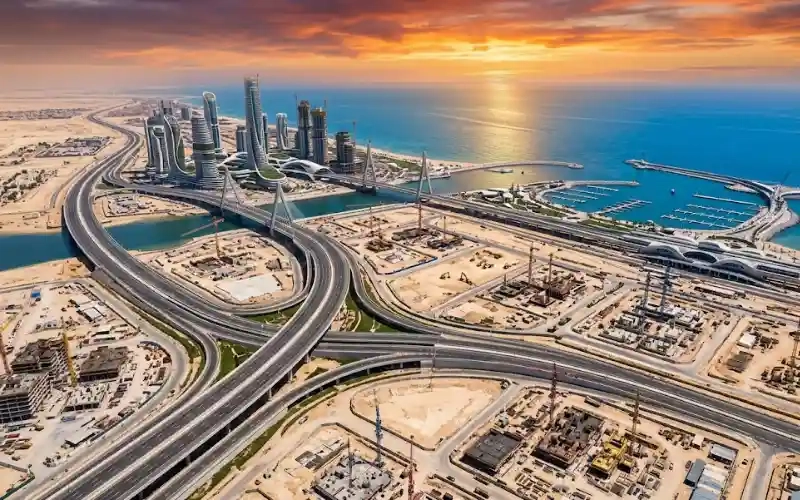
The Red Sea: Investment Based on Operations, Tourism, and Extended Seasons
Why Has the Red Sea Become More Attractive to Investors?
The Red Sea represents a fundamentally different investment model from the North Coast. Its strength does not rely solely on unit sales, but on tourism, hotels, airports, operations, and a climate suitable for longer periods throughout the year.
Areas such as El Gouna, Somabay, Ras Soma, Sahl Hasheesh, Makadi, Marsa Alam, and El Ain El Sokhna/El Galala possess qualities that make them far more operationally viable compared to many seasonal markets.
Somabay, for example, positions itself as an integrated tourism destination on the Red Sea, offering water sports, hotels, golf, and diverse hospitality experiences. The Somabay Golf platform highlights it as a year-round golf destination featuring the Gary Player Championship 18-hole course.
Ras Soma also emerges as a significant model for tourism-real estate investment, with Travco presenting it as a 600-feddan destination located 55 km from Hurghada, featuring a long sandy beach, the Steigenberger Resort hotel, and full tourism facilities.
Another important indicator is the entry of major new projects into the Red Sea market, such as Marassi Red Sea by Emaar Misr in the Somabay area — reflecting the Red Sea's transition into a more upscale and organized phase within the tourism real estate sector.
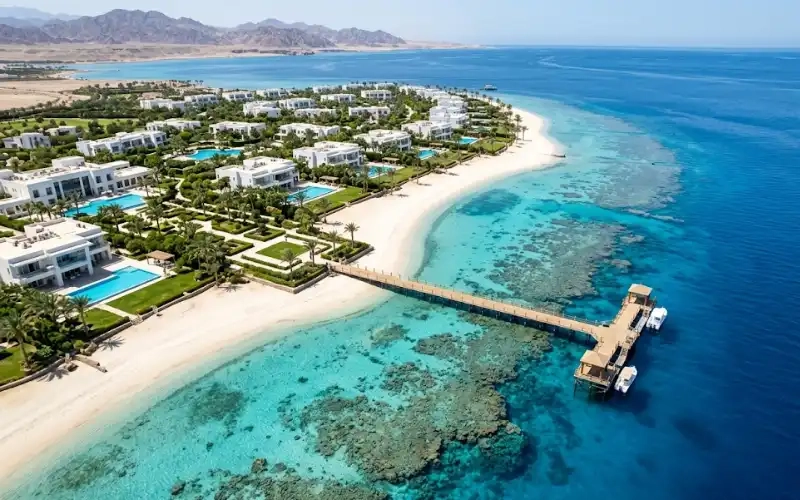
State Support for Tourism Expansion in the Red Sea
Egypt is moving toward increasing its hotel and tourism capacity, particularly in Red Sea areas. Reuters reported in February 2026 that Egypt announced a Marina and Hotel Development project in the Red Sea worth approximately $1 billion, as part of a broader plan to raise annual tourist arrivals to around 30 million by 2030, compared to approximately 19 million in 2025.
This direction supports the view that the Red Sea is not merely a coastal unit market, but part of a wider tourism strategy built on hotels, marinas, serviced apartments, amenities, and international demand.
Strengths of Investing in the Red Sea
The first strength is the extended operational season. The Red Sea can be used in both summer and winter, benefiting from foreign tourism, diving, water sports, golf, and a relatively mild climate across long stretches of the year.
The second strength is demand diversity. Demand in the Red Sea does not come solely from Egyptians — it comes from foreign tourists, overseas residents, yield-seeking investors, and a segment of Arab and international buyers.
The third strength is the potential to achieve a more stable rental yield when the unit is within a well-managed project or located near hotels, services, and an airport.
The fourth strength is that some Red Sea areas are already fully operational rather than purely under development. The presence of existing hotels, airports, marinas, and operational services reduces waiting risks compared to projects that need years before real life begins within them.
Investment Challenges in the Red Sea
Despite the Red Sea's operational strengths, investing there requires a different kind of awareness.
The first challenge is that Egyptian emotional demand for the Red Sea is lower than for the North Coast. The North Coast carries unique social weight for a large segment of Egyptians, while the Red Sea relies more on operational performance and tourism flow.
The second challenge is that resale can be slower in some areas if the project is not well-known or well-managed.
The third challenge is that investment success in the Red Sea is heavily tied to management quality. A good unit within a poorly operated project may fail to generate adequate returns, while a smaller unit in a well-managed project can outperform it significantly.
The fourth challenge is that some new projects are priced very high based on developer reputation or future narratives alone, making careful price evaluation essential.
A Direct Investment Comparison Between the North Coast and the Red Sea
| Comparison Criterion | North Coast | Red Sea |
|---|---|---|
| Nature of Investment | Capital growth and value preservation | Tourism operations and rental yield |
| Local Demand Strength | Very strong | Moderate to strong depending on the area |
| Foreign Demand | Emerging and growing | Stronger and more established |
| Operational Season | More seasonal | Longer throughout the year |
| Rental Yield | Strong mainly in summer | More sustainable year-round |
| Resale | Strong in premium projects but competitive | Depends on project reputation and operations |
| Developer Impact | High | Very high |
| Management Impact | Important | Critical |
| Best Time Horizon | 3 to 7 years | 2 to 5 years depending on operations |
| Best Suited For | Those seeking a long-term luxury asset | Those seeking operations, income, and longer use |
Which Is the Better Investment?
In Terms of Capital Appreciation
The North Coast may be stronger over the long term — especially in large projects with scarce locations close to future development hubs like Ras El Hikma. The investment narrative there is massive, and the scale of announced investments gives the region a strategic weight that cannot be ignored.
However, this does not mean every unit in the North Coast will appreciate equally. The gap will be significant between a premium unit with sea or lagoon views within a strong project, and an ordinary unit within a project with heavy supply.
In Terms of Rental Yield and Operations
The Red Sea generally leads in operational logic. Year-round tourism, hotels, airports, water activities, and golf make rental yield more achievable — provided the project, unit, and management are chosen carefully.
Therefore, an investor asking about annual income or near-term operations should look seriously at the Red Sea, on the condition that they do not overpay or invest in a project with unclear management.
In Terms of Safety
Safety in the North Coast comes from the strength of local demand, project reputation, and social value preservation.
Safety in the Red Sea comes from operations, tourism, foreign demand, and extended seasons.
Therefore, it is not accurate to say one region is categorically safer than the other. The more precise statement is:
- The North Coast is safer for those seeking long-term value preservation within a strong Egyptian market.
- The Red Sea is safer for those seeking tourism operations and a more realistic rental yield.
Illustrative Examples for Understanding the Market Without Criticizing Any Specific Project
Example 1: An Investor Buying a Unit in a Luxury North Coast Project
This investor must enter with a hold mentality, not a quick-flip strategy. If the unit is premium, within a strong project, and at a reasonable entry price, it may achieve solid growth over 3 to 5 years — especially as Ras El Hikma develops and infrastructure improves.
However, if the unit is ordinary, purchased at a very high price, or carries a heavy installment burden, the investor may need significantly longer to sell at a meaningful profit.
Example 2: An Investor Buying a Unit in Somabay, Ras Soma, or a Major Red Sea Project
This investor must ask different questions:
- Does the project operate year-round?
- Is there a rental management service?
- Are there nearby hotels?
- Is the airport close?
- Are there real activities that attract visitors outside the summer season?
- Can the unit be rented to foreigners or Egyptians on short or medium-term basis?
If the answers are positive, the Red Sea may outperform the North Coast in terms of operations and returns.
Example 3: An Investor Seeking a Luxury Family Asset with Value Preservation
The North Coast may be more suitable, as it fulfills the social and family aspirations of a large segment of Egyptians — particularly in well-known projects with upscale communities.
Example 4: An Investor Seeking Nearer Income Rather Than Future Price Appreciation Alone
The Red Sea may be more suitable, as operational opportunities are longer, tourism demand is more diverse, and the market is especially strong in areas with existing hotels, services, and a nearby airport.
A Golden Rule for Investors
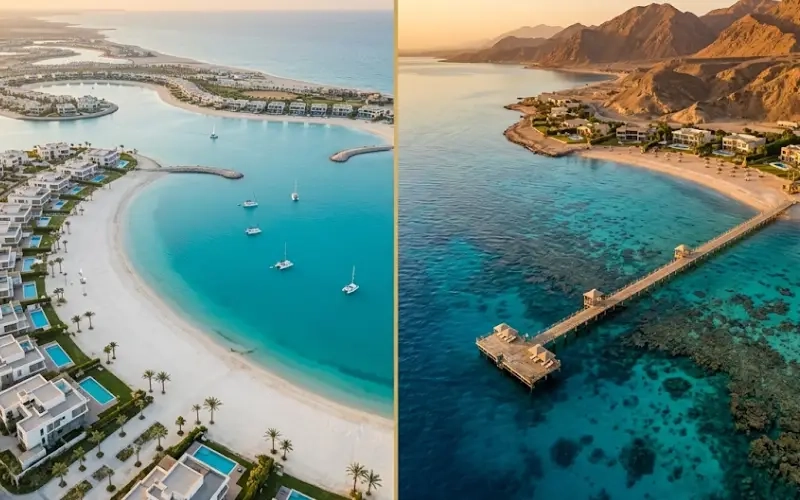
In the North Coast: Buy Scarcity
Scarcity means a strong location, sea or lagoon views, proximity to services, a reputable developer, and a community with growth potential. It is not enough for the unit to simply be in the North Coast. It must be a unit capable of standing out amid heavy supply.
In the Red Sea: Buy Operations
Operations mean proximity to an airport, hotel, marina, active beach, rental management, and established services. It is not enough for the unit to simply be on the Red Sea. It must be within a system capable of attracting users and tenants throughout the year.
When Is the North Coast the Better Choice?
The North Coast is better when the investor is seeking a long-term luxury asset, does not need an immediate rental yield, can hold the unit for several years, and is betting on the region's development and value appreciation over time.
It is also suitable for investors who want family and social use, alongside the possibility of a capital gain upon future sale.
Best Unit Types to Invest in on the North Coast
Units in scarce locations, close to the sea or lagoon, within strong projects, with comfortable payment plans, and at a rational entry price relative to available alternatives.
When Is the Red Sea the Better Choice?
The Red Sea is better when the investor is seeking nearer operations, rental income, year-round use, exposure to foreign demand, or a unit that can be managed as a tourism or hotel-style property.
It is also suitable for investors who want to reduce reliance on summer-only seasonality, and who wish to invest in a region with existing or growing tourism demand.
Best Unit Types to Invest in on the Red Sea
Units close to hotels, the beach, a marina, service areas, and projects that offer clear operational and rental management.
Is Investing in Large Projects Guaranteed?
Large projects offer a higher degree of confidence, but do not eliminate risks. A strong developer name matters — but it is not sufficient alone. The following must be studied:
- Price per square meter relative to the market
- The unit's location within the project
- Payment plan
- Delivery timeline
- Operational quality
- Maintenance costs
- Rental potential
- Competing supply volume
Investing in a large project at an inflated price may take many years to generate a strong return, while investing in a solid project at a reasonable entry price can be both safer and more profitable.
Final Investment Recommendation
The North Coast cannot be considered a direct substitute for the Red Sea, nor can the Red Sea replace the North Coast. Each region serves a different investment objective.
- The North Coast is an investment in scarcity, prestige, value preservation, and long-term capital growth.
- The Red Sea is an investment in operations, tourism, rental yield, and extended usage seasons.
Therefore, the smart investor does not only ask: Where should I buy? They ask: Why am I buying? What is my goal? When do I want to exit? Do I need income? Can I afford to wait?
Key Takeaways for Investors
If your goal is to hold a luxury asset for several years with expectations of strong capital growth, the North Coast — in large projects and scarce locations — may be a suitable choice.
If your goal is nearer operations, rental income, and year-round use, then the Red Sea — in large, well-managed projects — may be more appropriate.
In both cases, the decision should not be based on the project name alone, but on entry price, unit location, operational viability, payment plan, and exit ease.
Successful coastal real estate investment in Egypt is no longer just about buying a unit in a well-known project — it has become a financial decision requiring careful analysis of current value, operational opportunities, the area's future, and exit timing.
Frequently Asked Questions
Which Is Better for Real Estate Investment: The North Coast or the Red Sea?
The answer is not absolute. The North Coast relies on capital growth and value preservation, while the Red Sea relies on tourism operations, rental yield, and extended usage seasons. Each region serves a different investment objective.
Is the Rental Yield in the Red Sea Better Than in the North Coast?
The Red Sea generally leads in operational logic due to its longer season and foreign tourism base. However, the result depends heavily on the quality of operational management and the unit's location within the project.
What Is the Impact of the Ras El Hikma Deal on North Coast Investment?
The ADQ deal — involving $35 billion in investment and Modon's appointment as lead developer — positions the area for gradual repricing over the medium and long term. This does not mean every North Coast unit will automatically appreciate, but it places the region within a much broader investment spotlight.
Is Investing in Red Sea Projects Like Somabay and Ras Soma Safe?
Established, well-managed projects offer a higher degree of safety thanks to existing hotels, services, and real activities. However, price and management quality must be carefully evaluated — the project name alone is not sufficient.
What Is the Best Unit Type for Investment in the North Coast?
Units in scarce locations close to the sea or lagoon, within strong projects, with comfortable payment plans, and at a rational entry price relative to available alternatives.
What Is the Best Unit Type for Investment in the Red Sea?
Units close to hotels, the beach, a marina, service areas, and projects that provide clear operational and rental management.