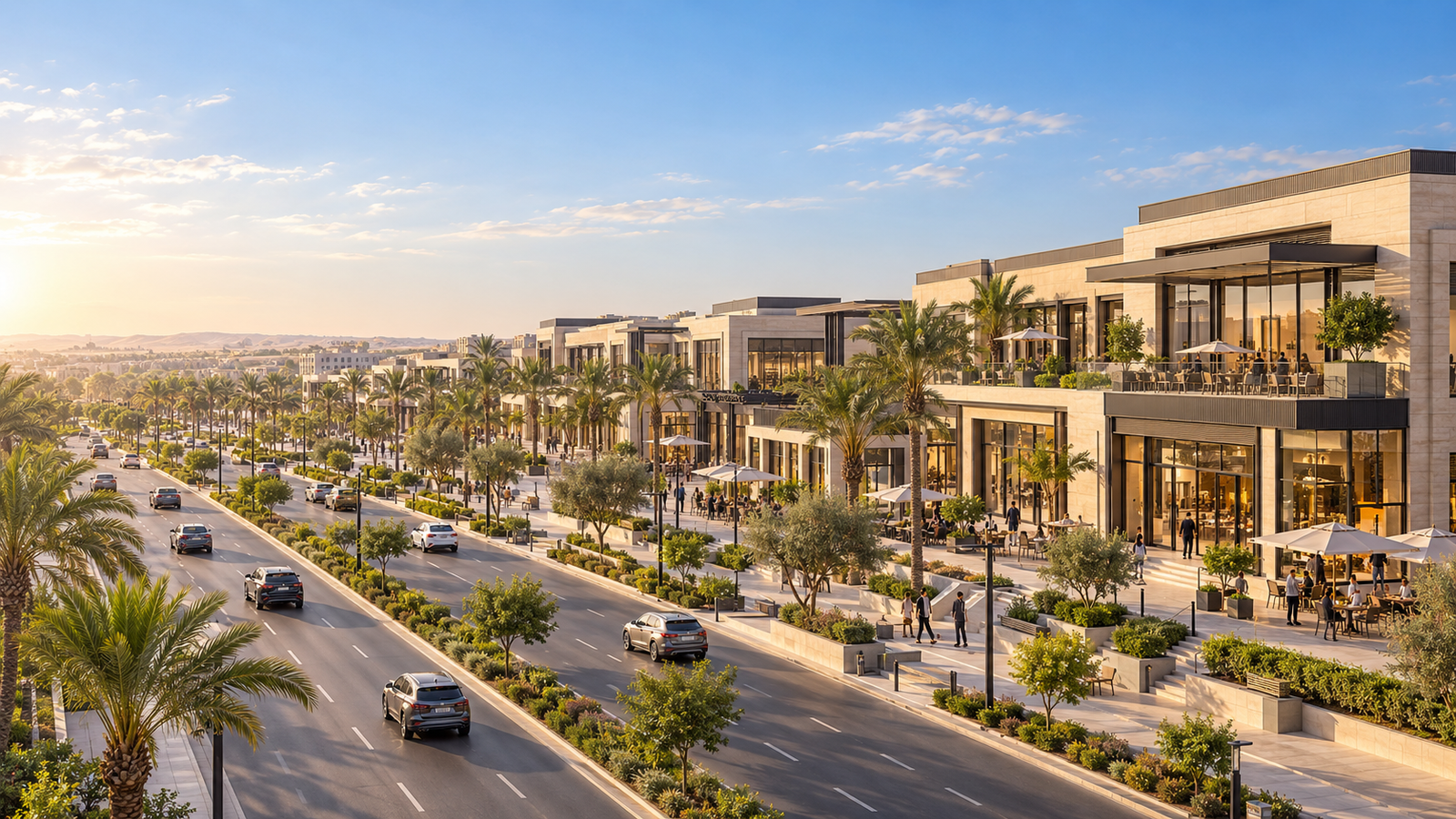
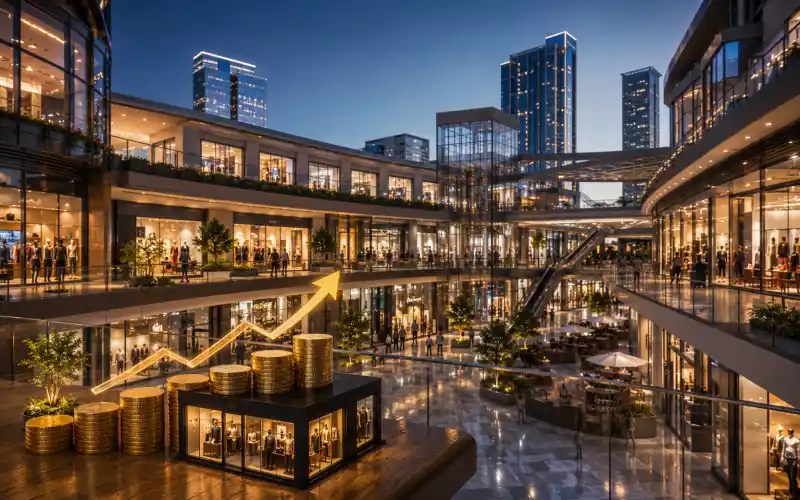
Over the past few years, the real estate market has witnessed a significant shift in investor preferences. Investment is no longer limited to residential apartments or land; instead, investing in commercial units within newly developed shopping malls has become one of the most attractive opportunities for capital, particularly with the rapid urban expansion and the development of new cities and large-scale residential projects housing thousands of residents.
Modern shopping malls are no longer just retail destinations. They have evolved into integrated commercial hubs that combine retail stores, restaurants, cafés, medical clinics, administrative offices, and entertainment facilities. This creates continuous daily foot traffic and significantly increases the chances of success for a wide range of businesses.
Today, many investors are looking for opportunities that provide a stable source of income while allowing their assets to appreciate over time. Commercial real estate investment offers both recurring rental income and long-term capital appreciation, especially when the project is strategically located and carefully selected.
In this guide, we will cover everything you need to know before purchasing a commercial unit in a new shopping mall, from the key advantages of this type of investment to the most important factors that can help you maximize your return.
Investing in Commercial Units: One of the Best Types of Real Estate Investment
Commercial real estate investment has gained remarkable popularity due to the ongoing transformation of the property market. As new urban communities continue to emerge and population density increases in modern cities, the demand for well-developed shopping centers offering a wide range of services has grown substantially.
Unlike residential units, which may remain vacant for extended periods, commercial units benefit from continuous economic activity, giving them greater potential to generate higher returns, particularly when located in professionally managed malls with prime locations.
In addition, new shopping malls are developed based on comprehensive market research. Commercial activities are carefully planned and distributed to create a balanced mix of services that attracts a large number of visitors, directly contributing to the success of investors within the project.
Some of the main reasons why commercial units are considered an attractive investment include:
- High demand for commercial spaces.
- Faster leasing opportunities.
- A wide variety of business activities.
- Consistent monthly rental income.
- Long-term appreciation in property value.
- Lower vacancy rates in successful developments.
How Commercial Units in Shopping Malls Differ from Traditional Street Shops
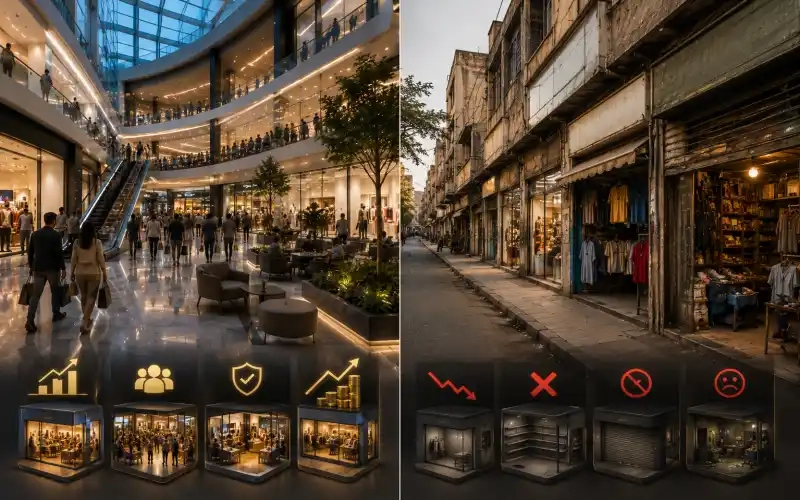
Many people assume that purchasing a retail shop on a busy street offers the same investment potential as buying a commercial unit inside a shopping mall. However, the reality is quite different.
Shopping malls operate through an integrated system that includes professional management, maintenance, marketing, security, and visitor flow management. This creates a stable business environment that helps tenants achieve stronger business performance.
Traditional street shops, on the other hand, depend largely on the owner's individual efforts and are often more vulnerable to changes in the surrounding area or fluctuations in customer traffic.
Some of the key differences include:
1. Customer Traffic
Shopping malls benefit from a continuous flow of visitors thanks to their diverse mix of retail stores, restaurants, entertainment venues, and services. Traditional shops usually depend mainly on local neighborhood traffic.
2. Operational Quality
Professional mall management ensures that the entire property maintains high service standards, providing customers with a consistently enjoyable shopping experience.
3. Business Environment
Shopping malls offer organized, secure, and comfortable surroundings that encourage visitors to stay longer, increasing the likelihood of making purchases.
4. Investment Value
Commercial units within successful malls tend to appreciate in value faster than many traditional retail properties.
Key Advantages of Investing in Commercial Units Inside New Shopping Malls
1. High Investment Returns
One of the biggest reasons investors choose commercial units is their ability to generate attractive rental income. Retail spaces inside shopping malls often produce higher monthly returns, especially in projects with high occupancy rates.
Commercial rental prices are generally higher than residential rents, resulting in stronger annual investment returns.
2. Property Value Appreciation
Commercial units purchased during the early construction stages of a new mall are typically offered at lower prices than their value after the project is completed and fully operational.
As the mall attracts well-known brands and increasing numbers of customers, the market value of commercial units rises steadily, providing investors with attractive capital gains when reselling.
3. Diverse Business Opportunities
One of the greatest advantages of investing in shopping malls is the flexibility to choose a business that matches the project's target audience and overall concept. This diversity strengthens the success of the mall while making it a comprehensive destination for visitors.
Commercial units can accommodate businesses such as:
- Fashion and clothing stores.
- Restaurants and cafés.
- Pharmacies.
- Electronics retailers.
- Perfume and cosmetics shops.
- Gift stores.
- Footwear retailers.
- Children's stores.
- Supermarkets.
- Banking services.
4. Benefiting from the Mall's Marketing Campaigns
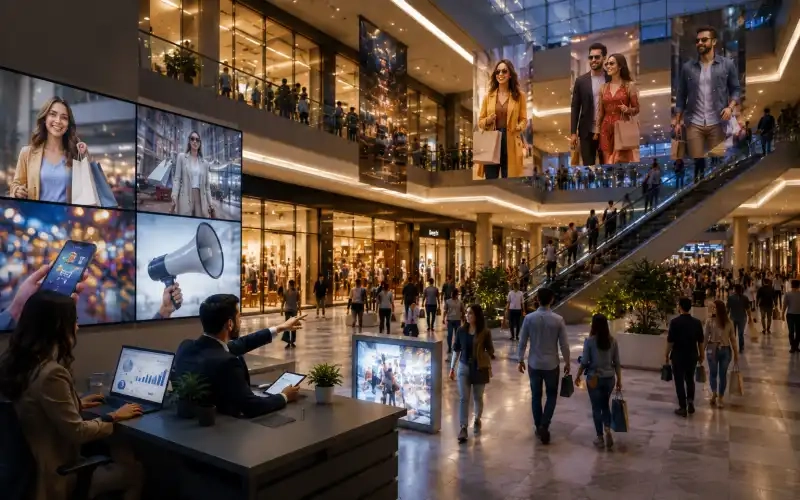
One of the most valuable advantages for investors is that the mall's management continuously carries out marketing campaigns to attract visitors. As a result, every commercial unit benefits from these promotional efforts without bearing the high cost of independent advertising.
These marketing initiatives may include:
- Seasonal promotions.
- Entertainment events.
- Festivals.
- Advertising campaigns.
- Social media marketing.
5. Lower Investment Risk
Every investment carries a degree of risk, but commercial units inside well-managed shopping malls generally offer lower risk compared to many other investment options.
This is mainly due to:
- Consistent demand for commercial businesses.
- Professional property management.
- Regular maintenance.
- High occupancy rates.
- A diverse customer base and steady visitor traffic.
What Factors Increase the Success of a Commercial Investment?
Not every retail unit inside a shopping mall generates the same level of profit. Several important factors influence investment performance, including:
Location Within the Mall
The location of the unit is one of the most critical success factors. Shops located near main entrances, escalators, or food courts usually receive significantly higher customer traffic.
Type of Business
The selected business should match both the nature of the mall and its target audience. A shopping mall serving a residential community has different customer needs than one located in a business district or tourist destination.
Quality of Property Management
Professional management helps maintain service quality, organize promotional events, attract reputable brands, and create an environment where all investors have a greater opportunity to succeed.
How to Choose the Best Commercial Unit in New Shopping Malls
Many investors believe that simply purchasing a commercial unit in a newly developed shopping mall guarantees high profits. However, the reality is that successful investment depends on several important factors that should be carefully evaluated before making a purchase.
Making the right choice from the beginning helps reduce investment risks and increases the potential for higher returns, whether through rental income or future resale.
1. Choose the Right Mall Location
The location of the shopping mall is one of the most important factors affecting the success of your investment. Look for projects located in rapidly growing urban areas with increasing population density.
The easier it is for people to access the mall, the higher the visitor traffic will be, directly benefiting all commercial units.
Some of the best locations for commercial investment include:
- New cities and urban developments.
- High-density residential communities.
- Business and administrative districts.
- Areas near universities and educational institutions.
- Locations close to major roads and transportation hubs.
Understand Your Target Customers
Before purchasing a commercial unit, ask yourself:
- Who are the expected customers?
- What is their average income?
- What are their needs and purchasing habits?
- Is the mall designed for families, office workers, students, or tourists?
Evaluate the Developer's Reputation
Choosing a project developed by a reputable real estate company is one of the most important factors for investment success.
Experienced developers pay close attention to every stage of the project, from selecting the location to managing the property after completion, giving investors greater confidence in their investment.
Before purchasing, review the developer's:
- Previous projects.
- Project completion record.
- Construction quality.
- Customer reviews.
- Property management performance.
Assess the Mall's Management and Operations
Even the best commercial projects can lose value if they are not properly managed.
Professional mall management should include:
- Organized marketing campaigns.
- Security and cleaning services.
- Regular maintenance.
- Parking management.
- Event planning and organization.
- Maintaining a balanced mix of businesses.
Strong management helps ensure the mall remains attractive to visitors for many years.
A Diverse Mix of Businesses
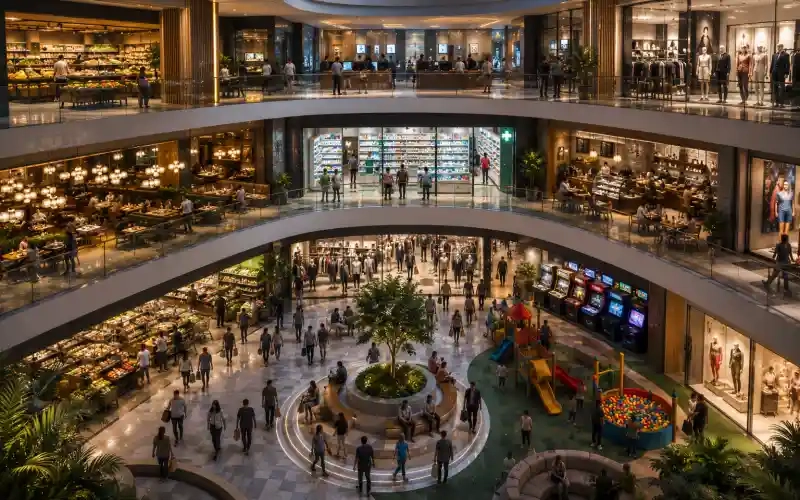
Successful shopping malls do not rely on a single type of business. Instead, they offer a diverse range of services that encourage visitors to spend more time inside.
When customers can find restaurants, cafés, pharmacies, supermarkets, fashion stores, banks, and entertainment areas all in one place, they are much more likely to return regularly. This continuous visitor traffic benefits every business operating within the mall.
Should You Buy a Ready Unit or an Off-Plan Unit?
One of the most common questions among investors is determining the right time to buy.
Off-Plan Commercial Units
These units offer several advantages:
- Lower purchase prices.
- Flexible payment plans.
- Greater potential for property value appreciation.
- Higher capital gains once the project becomes operational.
However, investors must wait until construction is completed before generating income.
Ready-to-Operate Commercial Units
Completed units provide different benefits, including:
- Immediate rental opportunities.
- Faster investment returns.
- Established visitor traffic.
- Lower investment risk.
The right choice depends on your investment goals, budget, and desired timeline.
Common Mistakes to Avoid When Investing in Commercial Units
Many investors make costly mistakes that reduce the profitability of their investment.
Buying Based Only on Price
A lower price does not always represent a better investment opportunity. It may reflect a weak location or limited future demand.
Ignoring Market Research
Analyzing competitors and evaluating market demand are essential steps before purchasing any commercial unit.
Choosing the Wrong Business Activity
Some malls perform better with restaurants and cafés, while others are better suited for fashion, retail, or service businesses. Understanding the project's target audience is essential.
Overlooking Contract Details
Always review all contractual terms related to operations, maintenance, service charges, ownership rights, and operating regulations.
Ignoring the Mall's Operating Strategy
A well-defined operational and marketing plan significantly increases the long-term success of both the mall and its commercial units.
Commercial Investment vs. Residential Investment
Many investors wonder whether commercial or residential real estate offers the better investment opportunity.
Commercial Real Estate Investment
Advantages include:
- Higher rental yields.
- Faster property appreciation.
- Longer lease agreements.
- Growing demand in commercial districts.
However, success depends heavily on selecting the right project.
Residential Real Estate Investment
Residential properties offer benefits such as:
- Easier management.
- Consistent housing demand.
- Lower capital requirements in some cases.
- Relatively stable investment performance.
However, residential properties generally generate lower rental returns than commercial units.
How to Maximize the Return on Your Commercial Unit
If your goal is to achieve the highest possible return, consider the following strategies.
Choose the Right Business Type
Selecting a business that matches the mall's target audience leads to stronger sales, increases the value of the unit, and improves tenant retention.
Invest in High-Quality Fit-Outs
A fully finished and well-designed commercial unit attracts tenants more quickly and can command higher rental rates.
Stay Updated on Market Trends
Consumer preferences and business trends continue to evolve. Monitoring market demand helps identify new opportunities and maintain strong investment performance.
Hold the Property for the Right Period
In many cases, commercial property values continue to increase as the surrounding area develops and population density grows. Holding the unit for several years may generate significantly higher profits than selling too early.
The Future of Investing in Commercial Units Within New Shopping Malls
Market indicators suggest that demand for commercial units will continue to grow, particularly with the ongoing expansion of new cities and mixed-use developments.
At the same time, changing consumer lifestyles have transformed modern shopping malls into comprehensive destinations that combine shopping, dining, entertainment, healthcare, and business services, making them increasingly attractive investment opportunities.
Industry experts expect premium commercial units to remain highly sought after by investors looking for stable rental income and long-term capital appreciation, especially in projects that offer strategic locations, professional management, and sustainable growth potential.