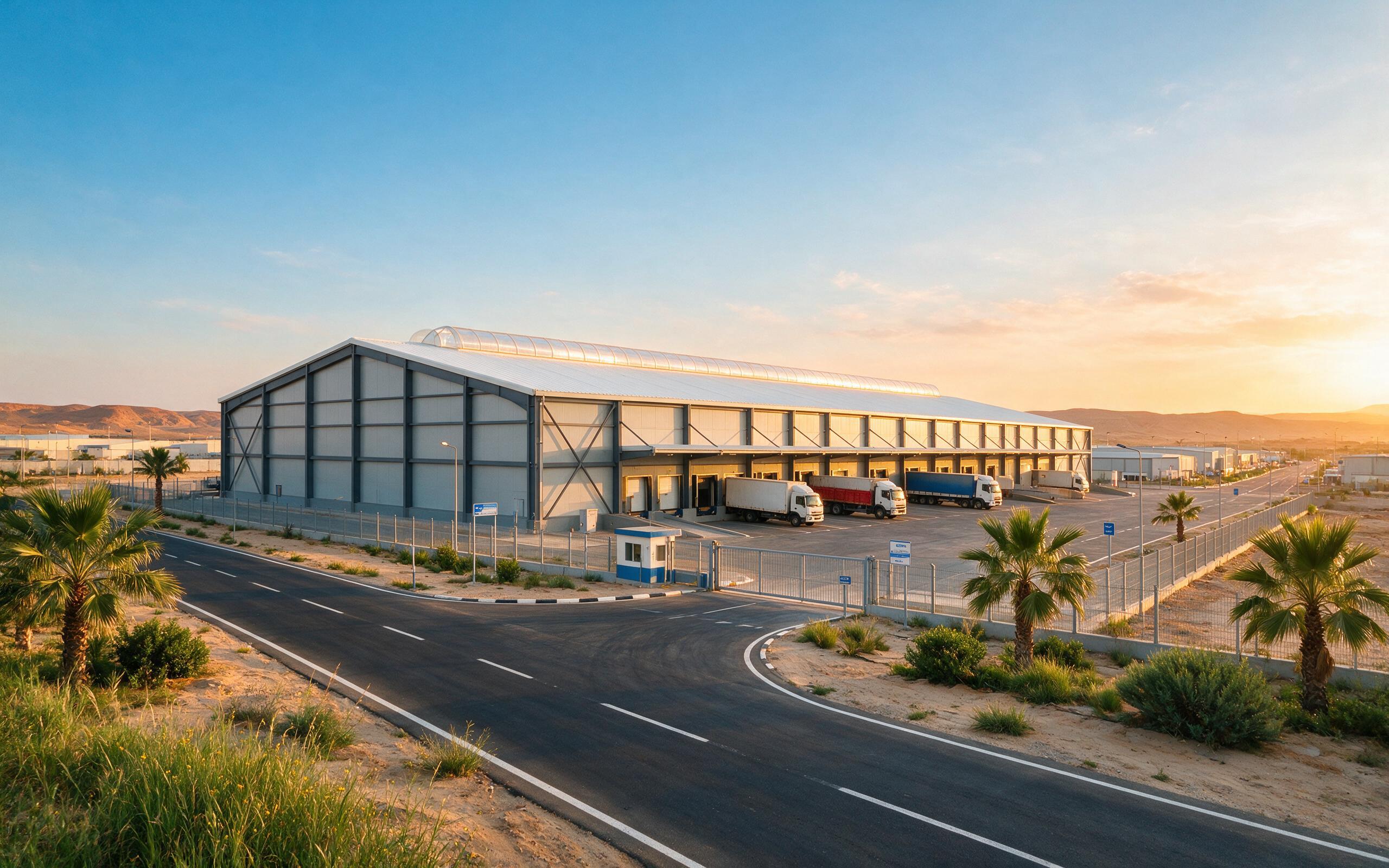
Can a property with no luxury frontage generate stable income while supporting a business that operates around the clock? It can when that property is a well-located warehouse connected to industrial production, trade, and distribution.
Warehouse investment in Egypt has become a practical option for investors seeking an income-producing asset rather than a property that simply sits idle while waiting for its value to rise.
Manufacturers need space to store raw materials and finished goods. E-commerce companies require efficient fulfilment centres. Retail chains look for locations that reduce transportation time and operating costs.
As Egypt continues to expand its road networks, dry ports, and logistics zones, warehouse value is no longer determined by size alone. It increasingly depends on how efficiently the property can support the supply chain.
A suitable warehouse can therefore generate stable rental income or deliver a profitable resale opportunity. Success, however, depends on carefully evaluating the location, licences, legal status, and operational specifications.
Why Is Warehouse Investment in Egypt a Promising Opportunity?
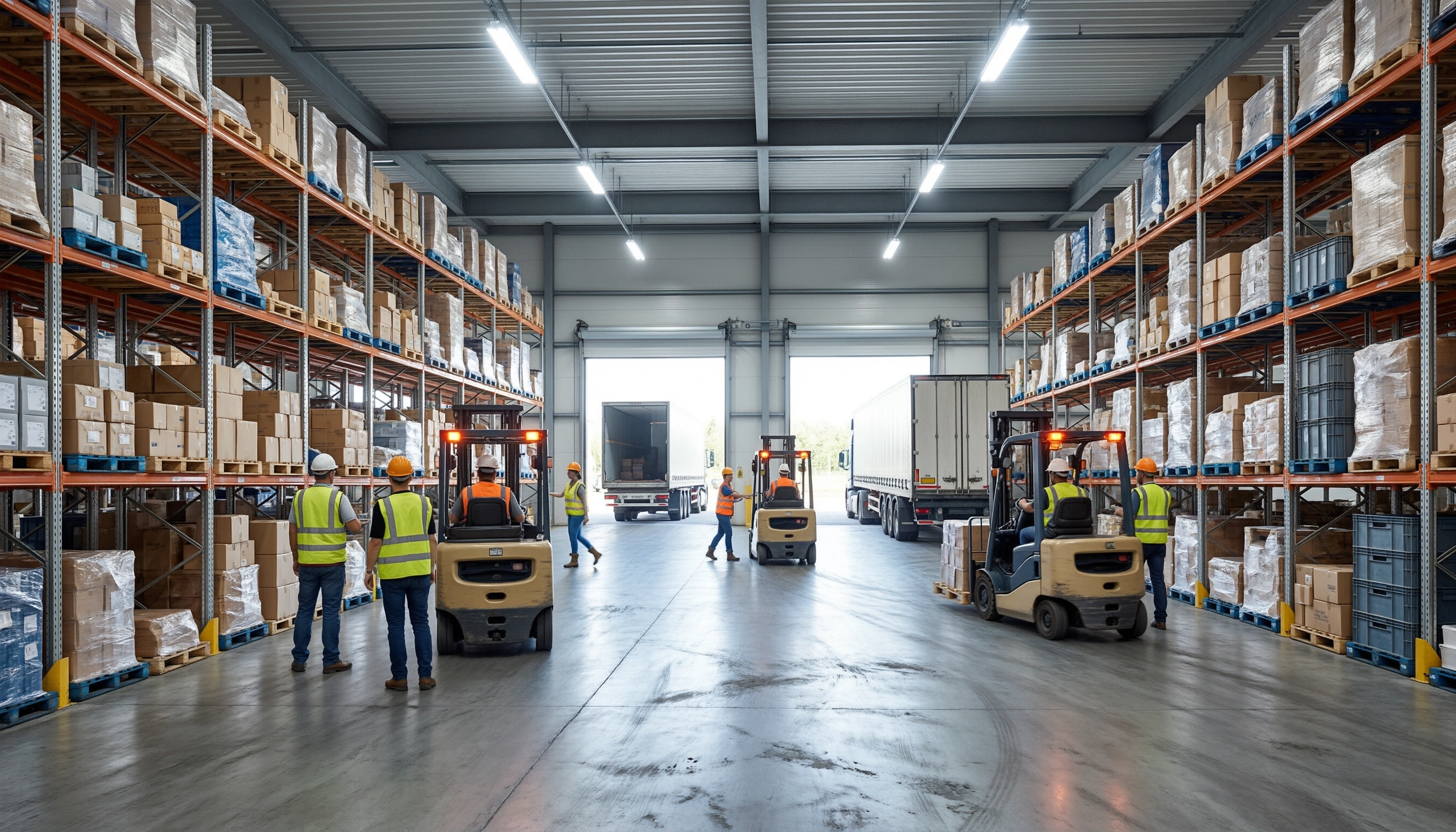
Demand for warehouses is directly linked to the movement of goods. Higher levels of production, imports, exports, and distribution create greater demand for secure and accessible storage space.
Commercial tenants also focus on practical factors, including:
- Truck access
- Clear ceiling height
- Floor load capacity
- Fire safety systems
- Proximity to major roads
- Distance from customers and production facilities
Infrastructure development is also supporting this market. According to data from Egypt’s General Authority for Investment and Free Zones, the country has 10 dry ports and 15 logistics zones, alongside plans to connect production areas with seaports through logistics corridors, road networks, and railway lines.
These developments increase the investment appeal of warehouses located near major transportation routes.
Growth in E-Commerce and Logistics Services
Every online order must be received, sorted, stored, packed, and prepared before delivery. The growth of online shopping therefore increases demand not only for delivery services, but also for warehouses close to major residential areas and fulfilment centres.
Market research indicates that e-commerce and third-party logistics services in Egypt are expected to continue expanding over the coming years. This could support demand for warehouses, fulfilment facilities, and distribution centres.
However, these forecasts should be treated as general market indicators rather than guaranteed returns for a specific property.
Demand from Manufacturers and Commercial Businesses
A manufacturer may prefer to rent a nearby warehouse instead of committing capital to purchasing additional space, particularly when production increases seasonally.
Food companies, pharmaceutical businesses, automotive parts distributors, and retailers also require warehouses with different operating specifications.
Common investment options include:
- A conventional dry warehouse
- A temperature-controlled or cold-storage warehouse
- An e-commerce fulfilment warehouse
- A small urban distribution facility
Each model has its own development cost, target tenant profile, licensing requirements, and potential return.
Warehouse Investment in Egypt: Leasing or Reselling?
Choosing between warehouse leasing and purchasing a warehouse for resale depends on several factors:
- Available investment capital
- Investment horizon
- Ability to absorb vacancy periods
- Willingness to manage and maintain the property
- Required property upgrades
- Preferred level of liquidity
Buying a Warehouse to Rent Out
This strategy aims to generate recurring cash flow while retaining ownership of the real estate asset.
Key advantages include:
- Recurring rental income that may increase when the lease is renewed
- Ownership of an asset that may appreciate over time
- The ability to increase rent by adding valuable operational features
- Potential to attract stable tenants through medium- or long-term leases
Potential disadvantages include:
- Vacancy periods between tenants
- Maintenance, insurance, and upgrade costs
- Difficulty changing the permitted use where licensing restrictions apply
- Repair and reinstatement costs when a tenant leaves
Buying and Reselling a Warehouse
A warehouse resale strategy may suit investors who can purchase a property below market value, improve its physical condition, resolve legal or licensing issues, and then remarket it at a higher price.
The main advantage is the ability to recycle capital more quickly once a buyer is secured. Investors also avoid the long-term responsibilities of tenant management.
However, profitability depends on the time required to sell, refurbishment costs, brokerage fees, and market demand. Capital may remain tied up if demand is weak or the asking price exceeds the property’s actual market value.
What Return Can Each Warehouse Investment Strategy Generate?
For a rental strategy, the warehouse return on investment (ROI) can be calculated using the following formula:
Annual net income ÷ Total investment cost × 100
For example, assume that the total purchase and fit-out cost is EGP 10 million. If annual net income after deducting vacancy, maintenance, and insurance is EGP 1.225 million, the estimated return would be:
EGP 1.225 million ÷ EGP 10 million × 100 = 12.25% per year
This is a simplified example intended to explain the calculation. It should not be treated as a guaranteed market average.
For a resale strategy, deduct the purchase price, development costs, brokerage fees, and all other expenses from the net selling price. Then divide the profit by the total investment cost.
The holding period must also be considered. A 15% return achieved within one year is very different from the same return achieved over three years.
Best Locations for Warehouse Investment in Egypt

10th of Ramadan City
10th of Ramadan City is one of the largest industrial cities east of Cairo. It is suitable for storing raw materials and finished goods and for serving businesses across the eastern Nile Delta and the Suez Canal governorates.
Warehouse value generally increases when the property is close to factories and major roads and provides suitable access for heavy vehicles.
The city also has a branch of the Industrial Development Authority. However, investors must still verify the actual legal and licensing status of each individual warehouse before purchasing or leasing it.
6th of October City and Abu Rawash
6th of October City and Abu Rawash are suitable for large warehouses and distribution centres serving western Cairo and Giza.
These areas benefit from their proximity to industrial zones and major transportation routes, including Al Wahat Road, the 26th of July Corridor, and the Middle Ring Road.
This makes them attractive to businesses operating in:
- Food distribution
- Retail
- Construction materials
- Industrial products
- Wholesale and regional distribution
Nasr City and New Cairo
Nasr City and New Cairo may be suitable for small and medium-sized warehouses serving urban commercial activities, including:
- Distribution within Greater Cairo
- E-commerce businesses
- Automotive spare parts
- Restaurants and retail chains
- Medical and office supply companies
Although the price per square metre is often higher in urban areas, the additional cost may be offset by proximity to customers, faster delivery times, and lower daily transportation expenses.
Areas Close to Seaports and Dry Ports
Ain Sokhna, East Port Said, Alexandria, and Damietta are suitable for businesses involved in imports, exports, container handling, and the redistribution of goods.
Locations near dry ports and logistics corridors connecting production zones with seaports are also becoming more important.
These areas may be particularly attractive to companies that rely on imported raw materials, container traffic, or products manufactured for export.
Factors Affecting Commercial Warehouse Prices in Egypt
Choosing the lowest price per square metre is not always the best investment decision. A low-priced warehouse may ultimately be more expensive to operate.
Commercial warehouse prices in Egypt are influenced by several factors.
Location
Proximity to factories, suppliers, customers, or the target market can reduce transportation costs and delivery times.
Accessibility
Investors should assess road width, truck entry, vehicle turning space, and loading and unloading access.
Net Usable Area
The area that can actually be used for storage is more important than the property’s total registered size.
Clear Ceiling Height
A higher ceiling allows the installation of modern racking systems and increases the usable storage capacity.
Floor Quality and Load Capacity
Warehouse flooring should be capable of supporting forklifts, pallet trucks, industrial equipment, and heavy goods.
Operational Facilities
Important facilities may include:
- Adequate electrical capacity
- Thermal insulation
- Ventilation
- Fire detection and suppression systems
- Security systems
- Water and drainage connections
Licensing and Permitted Use
Investors must verify the permitted business activity and confirm that the property is free from serious building violations, closure orders, or demolition decisions.
Loading and Marshalling Areas
Dedicated areas for waiting trucks, loading goods, and manoeuvring vehicles can significantly improve operational efficiency.
Proximity to Roads and Ports
Access to highways, seaports, dry ports, and logistics corridors directly affects transportation costs and the property’s appeal to commercial tenants.
Practical Tips Before Investing in a Warehouse
Identify Your Target Tenant First
Are you targeting a manufacturer, distributor, e-commerce company, food business, or retail chain?
The intended tenant profile will determine the required location, size, ceiling height, power supply, loading facilities, and licence type.
Compare Competing Properties in the Area
Compare similar properties based on:
- Asking price
- Size
- Licensing status
- Operational specifications
- Time spent on the market
A warehouse that remains listed for a long period may be overpriced or unsuitable for the needs of local tenants.
Review the Legal Status
Verify the following before making any financial commitment:
- Title deed or land allocation decision
- Chain of ownership and previous contracts
- Building permit
- Permitted business activity
- Utility connections
- Outstanding debts
- Building violations or administrative restrictions
Confirm Technical and Operating Approvals
Industrial activities may require approval from the Industrial Development Authority, Civil Protection authorities, and environmental or public health regulators, depending on the type and risk level of the activity.
Food, pharmaceutical, chemical, and hazardous-material storage may require additional approvals.
A qualified lawyer and an experienced engineer should review the property before the transaction is completed.
Calculate the Net Return
Do not rely only on the gross annual rent. Deduct all relevant expenses, including:
- Vacancy periods
- Maintenance and repairs
- Insurance
- Taxes and government fees
- Marketing and brokerage commissions
- Fit-out and upgrade costs
Inspect the Property Operationally
A physical inspection should cover:
- Truck access
- Gate width and height
- Flooring condition
- Electrical capacity
- Water supply
- Ventilation
- Emergency exits
- Fire detection and suppression systems
- Loading and unloading areas
Do Not Pay for Unusable Space
Closely spaced columns, narrow aisles, poor layouts, and limited ceiling height can significantly reduce actual storage capacity, even when the registered property area appears large.
The Future of Egypt’s Warehouse Market
The strongest future opportunities are likely to be found in warehouses that offer clear operational value.
E-commerce growth supports demand for fast-moving fulfilment warehouses. Industrial expansion increases the need for storage near production zones. Road, port, and logistics-centre developments also increase the value of locations connected to major transport corridors.
Demand is also likely to grow for better-organised facilities equipped with:
- Modern safety systems
- Warehouse management technology
- Inventory control systems
- Forklift-compatible layouts
- High-quality racking systems
- Efficient loading areas
Cold-storage and specialised warehouses may offer particularly attractive opportunities when the location, licence, and technical specifications are appropriate for the intended activity.
Government interest in developing and operating warehouses within dry ports and logistics centres also reflects the continued growth of Egypt logistics real estate and the wider logistics investment sector.
Conclusion
Successful warehouse investment in Egypt is not about buying the largest property or finding the lowest price per square metre. It is about owning an asset that meets genuine commercial and operational demand.
A licensed warehouse with good road access, suitable truck entrances, reliable safety systems, and efficient storage capacity has a stronger chance of attracting tenants and achieving a profitable resale.
Before investing, identify the target activity, compare locations, inspect the legal documents, assess the operational specifications, and calculate the return after deducting all expenses.
The choice between leasing and reselling should also reflect your investment horizon, liquidity requirements, and risk tolerance.
Browse available warehouses for sale or rent in Egypt, or consult a specialised commercial real estate adviser to obtain an accurate market comparison before purchasing a property or signing a long-term lease.
Frequently Asked Questions
How much does it cost to rent a warehouse in Egypt per square metre?
There is no single national average for warehouse rental prices in Egypt.
A sample of recent property listings showed approximate asking rents of:
- EGP 100 to EGP 156 per square metre per month in 10th of Ramadan City
- EGP 162 to EGP 320 per square metre per month in 6th of October City and Abu Rawash
- EGP 220 to EGP 600 per square metre per month in New Cairo
These are advertised asking prices rather than final transaction values. Actual rents may vary significantly depending on location, size, licensing status, technical specifications, and fit-out quality.
Where are the best places to buy an investment warehouse in Egypt?
10th of Ramadan City, 6th of October City, and Abu Rawash are among the strongest locations for industrial and manufacturing-related demand.
New Cairo and Nasr City may be more suitable for urban distribution, e-commerce, and smaller commercial warehouses.
Ain Sokhna, Port Said, Alexandria, and Damietta are attractive for businesses connected to ports, imports, exports, and containerised goods.
Is it better to rent out a warehouse or resell it?
Renting out a warehouse may be more suitable for investors seeking recurring income while retaining ownership of the property.
Reselling may suit investors who want to recycle capital and generate a capital gain after improving the property or resolving legal and licensing issues.
The better strategy depends on the net return, holding period, market demand, liquidity requirements, and level of risk.
What documents are required to buy or rent a warehouse in Egypt?
Important documents may include:
- Title deed or land allocation decision
- Chain of ownership contracts
- Building permit
- Confirmation of permitted use
- Sale or lease agreement
- Utility documentation
- Operating licences
- Civil Protection approvals
- Activity-specific technical approvals
All documents should be reviewed legally and technically before paying a deposit or signing a final agreement.
What ROI can investors expect from warehouse leasing in Egypt?
There is no fixed or guaranteed return.
Investors should calculate the annual net income after deducting vacancy, maintenance, insurance, taxes, brokerage fees, and other operating expenses. This amount should then be divided by the total purchase and fit-out cost.
The resulting return should be compared with alternative investments and evaluated against the property’s location, tenant demand, legal status, and risk profile.
Do warehouses in Egypt require a special operating licence?
In most cases, yes. Requirements depend on the property’s location, the intended activity, and the type of goods being stored.
Approvals may include an operating licence, Civil Protection approval, environmental or health compliance, and additional permits for food, pharmaceutical, chemical, or hazardous materials.
Investors should confirm all requirements with the relevant authorities before purchasing, leasing, or operating the warehouse.