
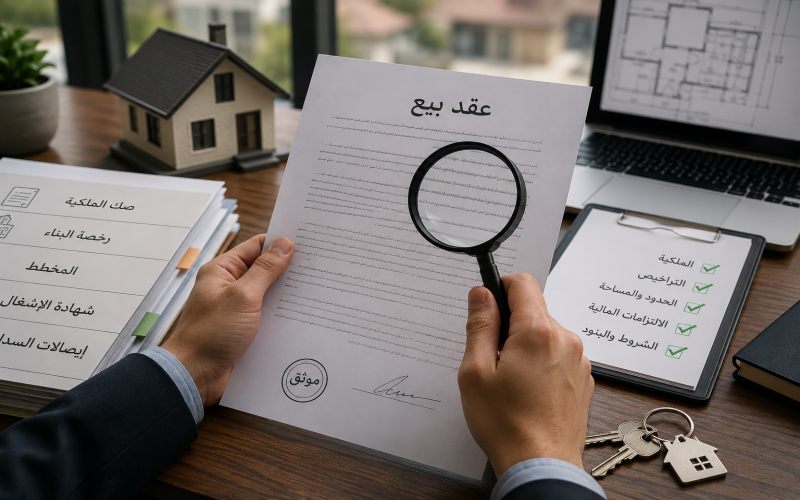
Buying a property does not start with viewing the unit, and it does not end when you agree on the price. Between liking the property and signing the contract, there is one stage that can protect you from serious problems: checking the documents.
Many buyers focus on the location, size, finishing, view, payment plan, and price. All of these are important. But the biggest mistake is to feel safe only because the property looks good, the seller seems honest, or the price feels attractive.
In real estate, problems do not always appear on the first day. Sometimes they appear after paying the deposit. Sometimes after signing the contract. Sometimes years later, when the buyer tries to register, sell, connect utilities, finance the property, or prove ownership.
That is why buyers should treat documents as part of the property itself. A property is not only walls, rooms, and a view. It is a legal right that must be clear, transferable, and free from hidden disputes as much as possible.
This guide explains how buyers, investors, and real estate brokers can review property papers before purchase, what documents to ask for, what red flags to watch, and when to involve a real estate lawyer.
Start with the Seller
The first question is not “How much is the price?”
The first question is: Who is selling?
Is the seller the original owner? Is the seller acting under a power of attorney? Is the seller an heir? Is the seller a company? Is the seller a developer? Is the seller an owner of a unit bought from a developer but not yet registered?
Each case requires a different type of review.
If the seller is an individual, the name on the national ID or passport must match the name in the ownership document. If the seller acts through a power of attorney, the POA must be reviewed carefully. It should clearly allow the sale of real estate, signing contracts, receiving payment, transferring rights, and dealing with authorities if needed.
If the seller is a company, a signature from a sales employee is not enough. You need to review the commercial register, tax card, signing authority, board resolution, or internal authorization when required.
If the property is being sold by heirs, the buyer should review the inheritance certificate, identify all heirs, and make sure all of them sign or are represented by valid powers of attorney. Buying from one heir while other heirs are not represented is one of the most common causes of long disputes.
Review the Ownership Document
The ownership document is the backbone of the transaction. It may be a registered deed, a registered court judgment, a chain of preliminary contracts, an allocation contract from a city authority, a developer contract, or an assignment document.
The key point is not to rely on a photo sent by WhatsApp. The buyer or lawyer should review the original document or an official copy whenever possible.
Ask one simple question: How did ownership reach the seller?
Did the seller buy from a previous owner? Inherit the property? Receive an allocation from a government entity? Buy from a developer? Receive an assignment? Is there final registration, or is ownership still based on preliminary contracts?
A serious buyer does not look only at the last contract. A serious buyer checks the full chain of title. If there is a missing contract, an unsigned document, an unclear power of attorney, or an heir who has not signed, the process should stop until the legal position is clear.
Make Sure the Property Matches the Documents
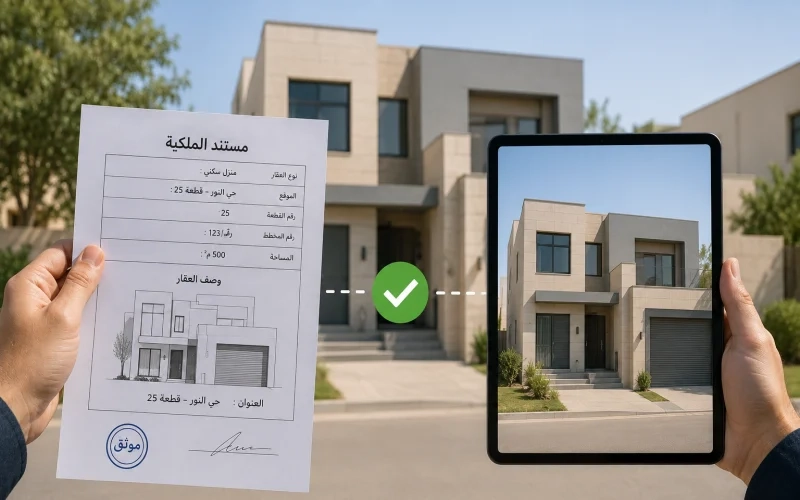
Sometimes the ownership chain is acceptable, but the property description does not match reality.
This is why the unit details must be checked carefully:
- Address
- Unit number
- Floor number
- Area
- Boundaries
- Plot number
- Building number
- Phase or block
- Use of the property
- Parking space or storage room
- Share in common areas, if applicable
In older apartment buildings, the buyer must make sure the apartment being sold is the same unit described in the contract. In compounds, the unit number, building number, phase, and area should match the developer’s records or the management company’s records. In land transactions, the plot area, boundaries, frontage, depth, and location must be checked on documents and on the ground.
Do not rely only on verbal descriptions. Ask for a map, layout, allocation plan, survey drawing, or official statement if available.
Check the Building License and Permitted Use
Not every built property is safe to buy. You must understand whether the building is licensed, whether the unit is within the licensed structure, and whether there are violations that may affect you later.
For residential apartments, ask for a copy of the building license or any available document showing the legal status of the building. Check the permitted number of floors and whether the unit is located on a licensed floor.
For commercial, administrative, medical, or educational units, permitted use is critical. Buying a unit as a clinic, restaurant, office, or shop does not mean the activity is allowed. The license, allocation, zoning, or compound rules must permit the intended use.
For land, the buyer must know the land use: residential, commercial, administrative, service, industrial, agricultural, or mixed use. Building regulations should also be reviewed, including footprint, height, setbacks, utilities, and planning status.
The rule is simple: do not buy an unverified use unless you understand the risks and have specialist advice.
Check Mortgages, Seizures, Disputes, and Third-Party Rights
One of the most dangerous mistakes is buying a property that carries a mortgage, seizure, dispute, tenant right, or third-party claim.
A lawyer should check the property’s legal position as much as possible. Is the property mortgaged to a bank? Is there a seizure? Is there a court dispute? Is there an inheritance conflict? Is there a long-term lease? Is there an existing tenant who cannot easily be removed? Are there unpaid installments, maintenance charges, penalties, or management fees?
For units inside compounds, request an account statement from the developer or management company showing remaining installments, maintenance dues, transfer fees, penalties, and any restrictions.
For rented properties, review the lease agreement, rental value, lease duration, renewal terms, and termination rights.
A property that looks cheap may be carrying obligations that make its real cost much higher.
Do Not Sign Before Reviewing the Contract
A contract is not a formality. It is the document that defines what is being sold, how payment will be made, when delivery will happen, and what each party is responsible for.
Before signing, review the following carefully:
- Seller and buyer details
- Full property description
- Seller’s ownership basis
- Price and payment schedule
- Payment dates
- Late payment penalties
- Delivery date
- Delivery condition
- Utilities and meters
- Parking and storage if included
- Maintenance charges
- Assignment or registration fees
- Taxes and charges
- Seller’s guarantee against third-party rights
- Seller’s obligation to appear before authorities
- Seller’s obligation to provide documents
- Dispute resolution
- Termination and refund clauses
Any unclear clause today can become a serious problem tomorrow. Avoid phrases such as “as agreed” or “to be arranged later” in essential matters. If it matters, it must be written clearly.
Review Payments and Receipts
Another common mistake is paying large amounts with unclear receipts or bank transfers that do not match the contract.
Every payment should be clear. Why was it paid? To whom? When? Is it a deposit? A reservation amount? Part of the price? Is it refundable? Is it deducted from the total price? Under what condition can it be refunded?
It is always safer to document payments through bank transfers, checks, or formal receipts. The receipt should mention the property details, purpose of payment, buyer, seller, date, and the receiver’s capacity.
If buying from a company, payment should generally be made to the company’s account, not a personal account, unless the reason is legally reviewed and understood. If buying from an individual, payment should be received by the owner or an authorized representative with clear authority to receive payment.
Check Utilities and Operating Obligations
A ready property should not only be checked legally. It should also be checked operationally.
Is there an official electricity meter? Is there a water meter? Is gas available? Are there unpaid utility bills? Are there unpaid maintenance fees? Are there consumption violations? Is the property connected to sewage? Is there an elevator? Who manages the building? Is there a homeowners association?
For commercial and administrative properties, check electricity capacity, air conditioning, entrances, exits, fire safety requirements, and activity approvals if needed.
For villas, check irrigation, drainage, swimming pool systems, generators, security, landscaping, and maintenance obligations.
These issues may not change ownership, but they can change the real cost and usability of the property.
Buying from Developers: Do Not Rely on the Brochure
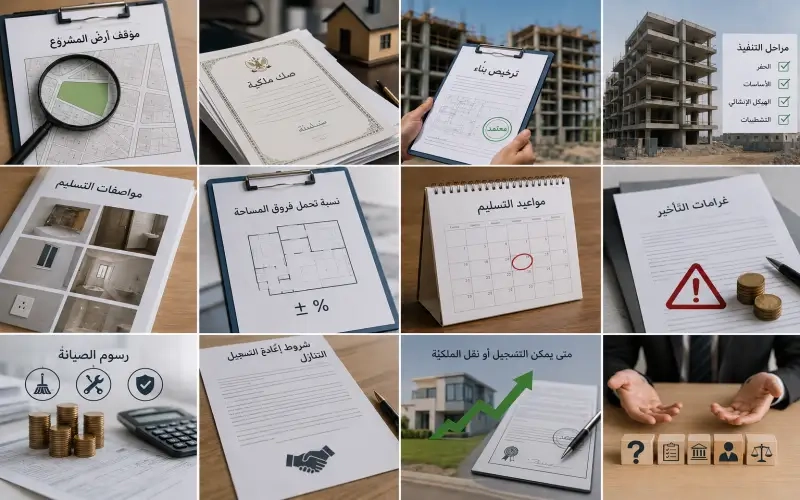
Buying from a developer requires a different kind of due diligence. Brochures, renders, and sales presentations are not substitutes for contracts and documents.
The buyer should review the land status, allocation or ownership, building licenses, construction phase, delivery specifications, area tolerance, delivery date, delay penalties, maintenance fees, resale or assignment rules, and the path to registration or transfer of ownership.
Ask clearly: Can the unit be registered? What is the status of the project land? Are there outstanding land installments? Are approvals final? Which authority controls the land? What are the assignment fees? Can the unit be sold before delivery? Are there restrictions on renting or modifications?
A serious developer does not avoid these questions. The developer may not disclose every document at the first meeting, but there should be clear answers and a proper legal path.
Older Buildings: Check Possession and Occupancy
In older buildings or existing apartments, the buyer must check who actually occupies the property.
Is the unit vacant? Is there a tenant? Is the lease old or new? Is there an eviction dispute? Is there a caretaker or occupant? Is there furniture or property belonging to someone else?
Do not buy a unit on paper and later discover that physical delivery is difficult. Delivery should be clear in the contract. The buyer should inspect the unit before signing, agree on the delivery date, and confirm whether it will be delivered free of people, furniture, and third-party rights.
Red Flags You Should Not Ignore
Certain signs should make the buyer pause immediately:
- The seller refuses to show original documents
- The price is far below market with no clear reason
- The ownership chain is incomplete
- Some heirs are not signing
- The sale depends on an old or unclear power of attorney
- The unit is on an unlicensed floor
- The documents do not match the actual property
- The developer avoids explaining the land status
- There are undefined debts or charges
- The seller asks for cash without a proper receipt
- The contract contains vague clauses
- The delivery date is unclear
The seller pressures the buyer to sign before review
A red flag does not always mean the transaction is impossible. It means the transaction needs deeper review before any payment is made.
The Role of a Professional Real Estate Broker
A professional broker does not replace a lawyer, but can protect the client from the beginning by organizing information and requesting the basic documents before pushing the deal forward.
A good broker asks about ownership documents, remaining installments, maintenance fees, delivery condition, utilities, violations, registration, assignment fees, and seller authority. The broker should also make clear what needs legal review.
The more organized the broker is before signing, the more trust the buyer has, and the lower the risk of delays after the deal is agreed.
Conclusion
Checking property documents before purchase is not a luxury. It is capital protection.
- Do not pay only because the price is attractive.
- Do not sign only because you like the property.
- Do not rely on trust alone, even if the seller seems respectable.
- Ask for documents.
- Confirm the seller’s identity and authority.
- Review the ownership chain.
- Match the property description with reality.
- Check licenses and permitted use.
- Verify debts, mortgages, disputes, and restrictions.
- Read the contract clause by clause.
- Document every payment.
- And involve a specialized lawyer before final commitment.
The right property is not only the one that fits your budget and lifestyle. It is the one you can own, use, rent, finance, and sell later with clarity and confidence.
Through NileEstate, buyers can reach more organized real estate opportunities and receive practical guidance that helps them ask the right questions before making a decision. A successful transaction does not start at signing. It starts with proper due diligence before signing.
Reliable References
- Law No. 114 of 1946 Regulating Real Estate Registration stipulates that legal transactions creating, transferring, modifying, or terminating original real property rights must be officially registered. Failure to register limits the effect of such transactions to personal obligations between the parties and does not transfer ownership rights against third parties.
- The official Egyptian Real Estate Platform explains that the final registration process includes reviewing all required documents, confirming the payment of fees, registering the new owner in the real estate registry, and issuing an official title deed to the buyer.
- In transactions conducted through a power of attorney, the power of attorney must be notarized and officially registered, explicitly granting the authority to sell or purchase real estate, while the final registration procedures must still be completed.
- A thorough legal due diligence process should review the seller’s identity, chain of ownership, registration status, mortgages, inheritance matters, the legal status of the developer or land, and all contract terms before any down payment is made.
- Real estate disposal tax in Egypt is commonly set at 2.5% of the transaction value and is generally the seller’s responsibility. In addition, registration fees and other related charges should be carefully reviewed before completing the transaction.